
Food is something everyone can relate to, and growing it is one of the most exciting ways for students to make a positive impact on the environment. Beyond being a learning opportunity, it’s a way for students to connect to nature and feel empowered. Growing food as a class activity, such as school gardens, windowsill herbs, or hydroponics systems let students see how plants grow, how ecosystems interact, and how their choices matter.
Globally, food systems account for over a quarter of greenhouse gas emissions, and close to half of the world’s habitable land is used for agriculture (Our World in Data, 2023). Research shows that almost half of the cumulative environmental impact of global food systems comes from just five countries ( Nature Sustainability study). Exploring where food comes from and who bears the environmental cost helps students understand climate change as a systems issue, and growing food in the classroom gives them the agency to create positive change in these systems.
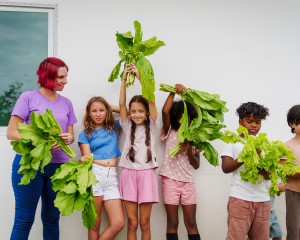
Hands-on food activities help students see how global systems connect to local choices. Tools like the Food Miles Calculator or the BBC Food Carbon Calculator allow students to compare the carbon footprint of different foods, starting discussions about seasonality, transport, and sustainability.
Growing food in the classroom can also introduce different local food systems with topics like pollinator gardens, local food availability, importance of composting, and cultural diversity in diets. Students begin to understand that climate friendly food systems are a mix of personal action, community awareness, and global context.
No matter your space or resources, there are many ways to grow food in the classroom:
By growing food, students learn how to take action and create positive environmental change. Small classroom projects make complex systems tangible while building agency and confidence. Students see that climate action can begin on a personal level, right in the classroom.
Looking for more ways to connect food, climate, and classroom learning? Check out our last blog post to explore the impacts of food waste and discover fun lesson plans for your class!